
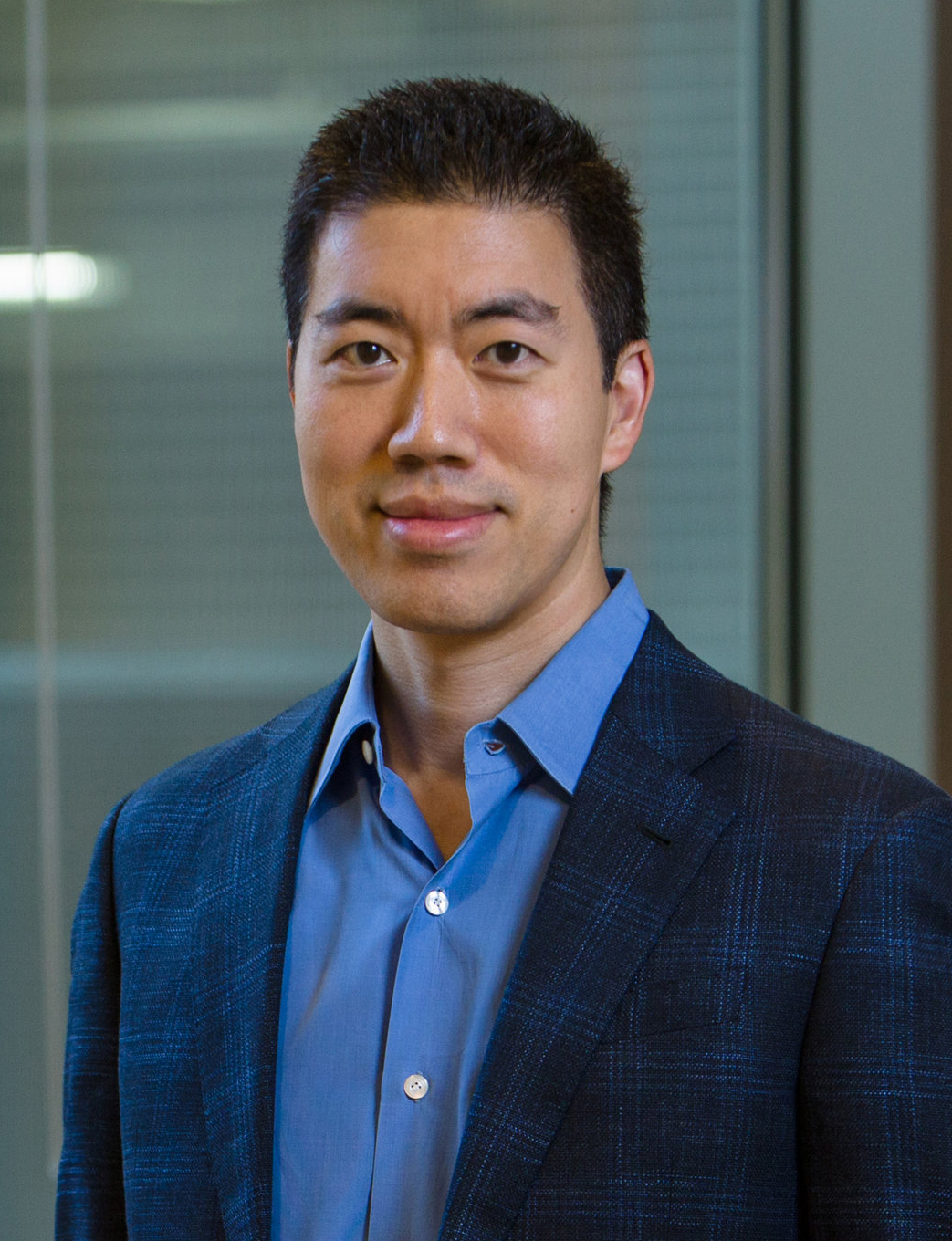
David R. Liu is the Richard Merkin Professor and director of the Merkin Institute of Transformative Technologies in Healthcare, vice-chair of the faculty at the Broad Institute of MIT and Harvard, the Thomas Dudley Cabot Professor of the Natural Sciences at Harvard University, and a Howard Hughes Medical Institute (HHMI) investigator. Liu’s research integrates chemistry and evolution to illuminate biology and enable next-generation therapeutics.
His major research interests include the engineering, evolution, and in vivo delivery of genome editing proteins such as base editors and prime editors to study and treat genetic diseases; the evolution of proteins with novel therapeutic potential using phage-assisted continuous evolution (PACE); and the discovery of bioactive synthetic small molecules and synthetic polymers using DNA-templated organic synthesis and DNA-encoded libraries. Base editing—the first general method to perform precision gene editing without double-stranded breaks, and a Science 2017 Breakthrough of the Year finalist—as well as prime editing, PACE, and DNA-templated synthesis are four examples of technologies pioneered in his laboratory. These technologies are used by thousands of labs around the world and have enabled the study and treatment of genetic diseases.
At least nine base editing clinical trials are already underway to treat diseases including two types of leukemia, hypercholesterolemia, sickle-cell disease, and beta-thalassemia, and the first clinical benefits of both ex vivo and in vivo base editing—including young T-cell leukemia patients whose lives were saved by base editing—have been reported. The first clinical trial using prime editing has been cleared by FDA to proceed, using prime editing to treat chronic granulomatous disease.
Liu graduated first in his class at Harvard College in 1994. During his doctoral research at UC Berkeley, Liu initiated the first general effort to expand the genetic code in living cells. He earned his PhD in 1999 and became assistant professor of chemistry and chemical biology at Harvard University in the same year. He was promoted to associate professor in 2003 and to full professor in 2005. Liu became a Howard Hughes Medical Institute investigator in 2005 and joined the JASONs, academic science advisors to the U.S. government, in 2009. In 2016 he became a Core Institute Member and Vice-Chair of the Faculty at the Broad Institute of MIT and Harvard, and Director of the Chemical Biology and Therapeutics Science Program.
Liu has published more than 250 papers and is the inventor on more than 100 issued U.S. patents. Liu has been elected to the U.S. National Academy of Sciences, the U.S. National Academy of Medicine, and the American Association for the Advancement of Science. He is the 2022 King Faisal Prize Laureate in Medicine. He has earned several University-wide distinctions for teaching at Harvard, including the Joseph R. Levenson Memorial Teaching Prize, the Roslyn Abramson Award, and a Harvard College Professorship. His research accomplishments have earned distinctions including the Ronald Breslow Award for Biomimetic Chemistry, the American Chemical Society David Perlman Award, ACS Chemical Biology Award, the American Chemical Society Pure Chemistry Award, the Arthur Cope Young Scholar Award, the NIH Marshall Nirenberg Lecturer, and awards from the Sloan Foundation, Beckman Foundation, NSF CAREER Program, and Searle Scholars Program.
In 2016, 2019, 2020, and 2021 he was named one of the Top 20 Translational Researchers in the world by Nature Biotechnology, and was named one of Nature’s 10 researchers in world. Liu was named as a leading global thinker by the Foreign Policy Leading Global Thinkers in 2017, to the STATUS List of 46 leaders in health, medicine, and science by STAT News, and as one of the “Most Influential People in Biopharma in 2023” by Fierce Biotech. Liu is the founder or co-founder of several public and private biotechnology and therapeutics companies, including Beam Therapeutics, Prime Medicine, Editas Medicine, Pairwise Plants, Chroma Medicine, Exo Therapeutics, and Nvelop Therapeutics.
Outside of the lab, Liu pursues a variety of hobbies at the intersection of science and art, including photography around the world, raising large bonsai trees indoors under LED light canopies he designed, creating art from wood, metal, stone, and/or electronic components, and painting.







David R. Liu’s Conflicts of Interest Disclosure
DRL is a co-founder and consultant for Beam Therapeutics, Prime Medicine, Pairwise Plants, Exo Therapeutics, Chroma Medicine, and Nvelop Therapeutics. He owns founders’ equity in these companies, receives consultancies from them, and serves on their scientific advisory boards. He also serves as a scientific advisory board member and equity owner of Tevard Biosciences, Insitro, and Genscript Biotech. DRL may receive honoraria and travel reimbursements for some speaking engagements. He is a co-inventor on patents related to his research, as listed on his CV. Some of these patents have been licensed to companies including those listed above. Potential conflicts of interest between his academic activities and his activities with other entities including the companies above are actively disclosed and managed in accordance with the conflict of interest policies of the Broad Institute, Harvard University, and HHMI.
The policies are available at:
https://www.broadinstitute.org/administration/conflict-interest-policy
https://vpr.harvard.edu/pages/financial-conflict-interest-policy
https://www.hhmi.org/about/policies